Sustainable Practices and Operational Performance in a Malaysian Higher Education Institution: A Resource-Based View Perspective
Keywords:
Sustainability, higher education institutions, operational performance, technological advancement, safety and health practices, environmental practicesAbstract
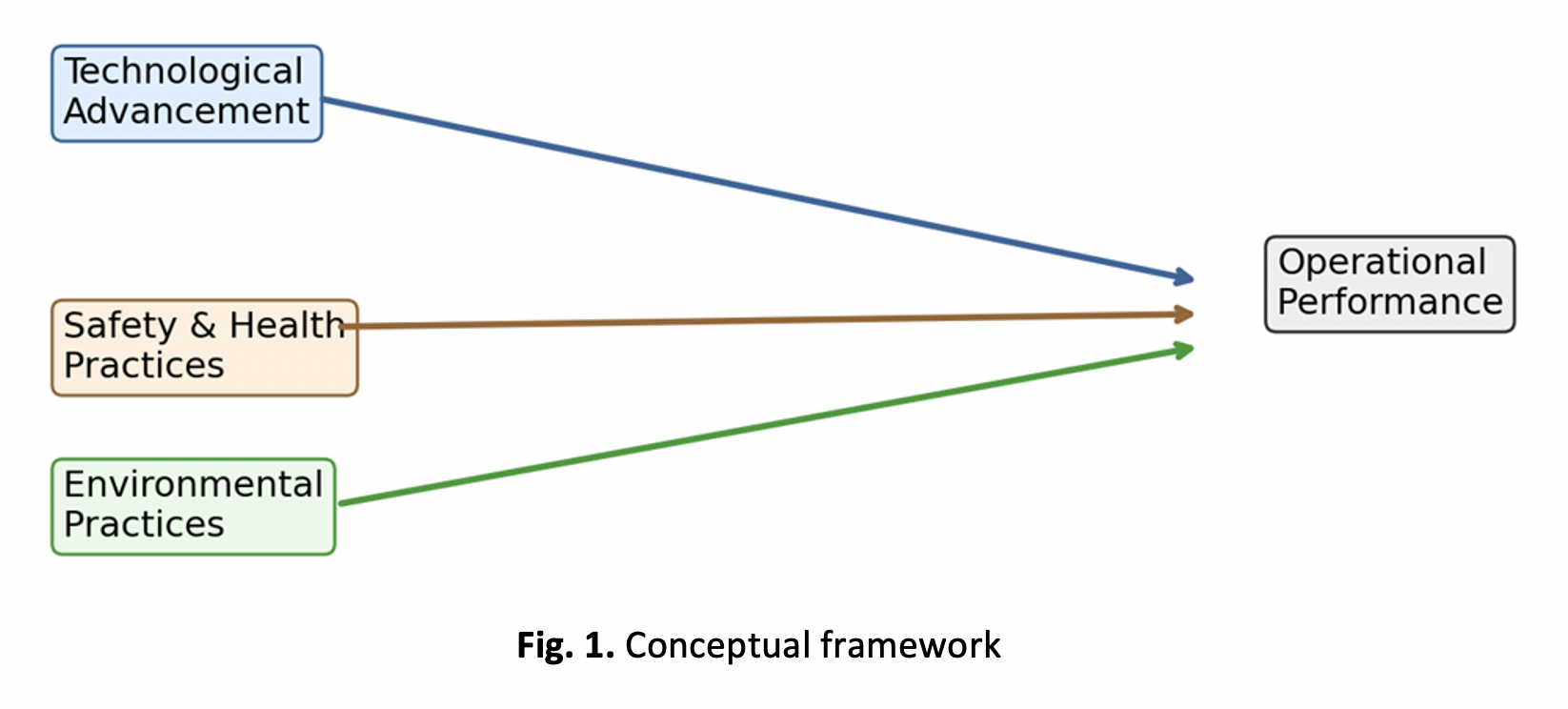
The education sector is increasingly encouraged to implement sustainable practices to enhance environmental stewardship, social responsibility, and institutional effectiveness. Higher education institutions (HEIs), as major consumers of resources, play a critical role in reducing environmental impact while improving operational efficiency. This study aims to examine the influence of sustainable practices on the operational performance of the Management and Science University (MSU), Malaysia. Guided by the Resource-Based View (RBV), the research investigates three dimensions of sustainable development: advancement of technology, safety and health practices, and environmental practices. A quantitative survey involving 278 academic and support staff was conducted, and the data were analyzed using descriptive statistics, correlation analysis, and multiple regression. The findings reveal that advancement of technology and environmental practices significantly enhance operational performance, whereas safety and health practices show no direct statistical effect. These results indicate that sustainable practices function not only as ethical responsibilities but also as strategic resources that strengthen institutional efficiency, reduce operational costs, and improve reputation. The study contributes empirical evidence from a developing-country context and offers recommendations for policymakers and HEI leaders to strengthen digital transformation, environmental initiatives, and safety culture within higher education.