Assessing Vocational Teachers’ Readiness for Inquiry-Based and Technology-Integrated Final Year Project Supervision: A Case Study at Batu Lanchang Vocational College
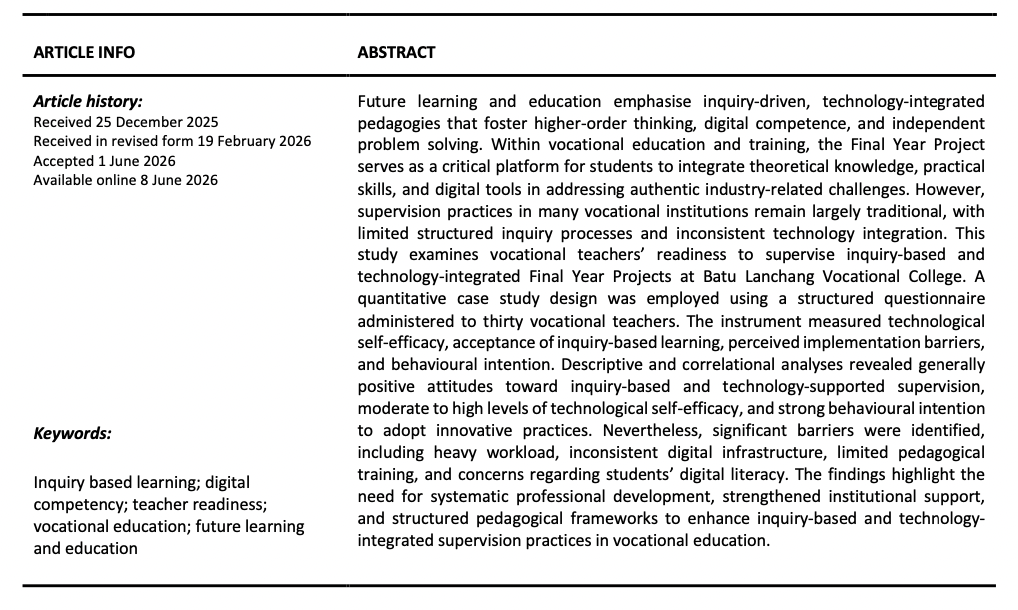
Keywords:
Inquiry based learning, digital competency, teacher readiness, vocational education, future learning and educationAbstract
Future learning and education emphasise inquiry-driven, technology-integrated pedagogies that foster higher-order thinking, digital competence, and independent problem solving. Within vocational education and training, the Final Year Project serves as a critical platform for students to integrate theoretical knowledge, practical skills, and digital tools in addressing authentic industry-related challenges. However, supervision practices in many vocational institutions remain largely traditional, with limited structured inquiry processes and inconsistent technology integration. This study examines vocational teachers’ readiness to supervise inquiry-based and technology-integrated Final Year Projects at Batu Lanchang Vocational College. A quantitative case study design was employed using a structured questionnaire administered to thirty vocational teachers. The instrument measured technological self-efficacy, acceptance of inquiry-based learning, perceived implementation barriers, and behavioural intention. Descriptive and correlational analyses revealed generally positive attitudes toward inquiry-based and technology-supported supervision, moderate to high levels of technological self-efficacy, and strong behavioural intention to adopt innovative practices. Nevertheless, significant barriers were identified, including heavy workload, inconsistent digital infrastructure, limited pedagogical training, and concerns regarding students’ digital literacy. The findings highlight the need for systematic professional development, strengthened institutional support, and structured pedagogical frameworks to enhance inquiry-based and technology-integrated supervision practices in vocational education.